

Plastic pollution of soils – assessing EU policies for a poorly regulated field
Are EU policies enough to protect our soils from plastic pollution? A new governance study says: not yet
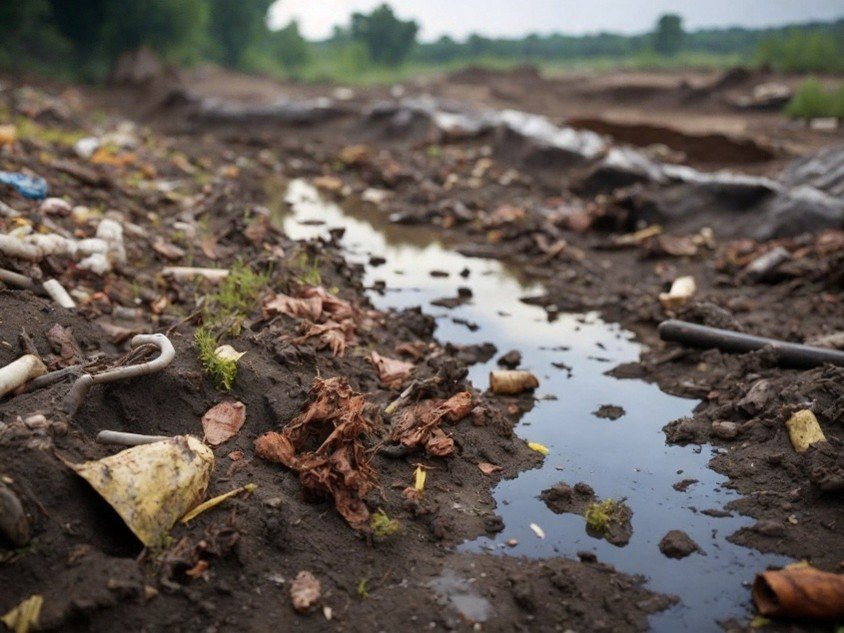
Plastic pollution is often portrayed as an ocean crisis — floating islands of debris, microplastics in marine life, and contaminated coastlines. But there is another area that receives far less attention: our soils.
A new policy-focused publication takes a closer look at how well European Union policies protect soils from plastic pollution — and the findings are both revealing and concerning.
Plastic particles are now widespread across terrestrial environments. In soils, they persist for decades, are extremely difficult to remove, and can disrupt soil structure, microbial communities, and plant growth. The consequences ripple outward — from reduced soil fertility and agricultural productivity to risks for wildlife and human health through bioaccumulation and food chain transfer. At a time when healthy soils are essential for climate resilience, ecosystem stability and biodiversity protection, this emerging threat demands serious policy attention.
The study conducts a qualitative governance analysis of EU policies and first of all finds that soil plastic is currently primarily governed through command-and-control instruments. While these instruments address specific entry pathways of microplastics, the overall approach remains fragmented and incomplete. Most measures fail to address nanoplastics, lack sufficient target stringency, and some produce rebound effects — reducing pollution in one pathway while overall plastic production continues to rise. The result: limited real-world impact on total soil plastic loads and non-compliance with biodiversity objectives.
Importantly, the publication does not stop at critique. It outlines two stronger strategic pathways forward:
- Pushing for an effective global climate policy, since plastics are fossil-fuel based — phasing out fossil fuels would also phase down plastic production.
- Introducing economic instruments, such as a strict, declining cap-and-trade system for plastic pellet production at the EU level.
Both strategies, the authors argue, must be paired with improved command-and-control instruments to be effective.
If you are interested in environmental governance, soil protection, or plastic policy, this publication offers a sharp, systems-level perspective — and proposes bold ideas that could reshape how we tackle plastic pollution at its source.
To read the full publication check out our publication section or follow the link: https://link.springer.com/article/
 English
  Spanish
  Dutch
Dutch  Polish
  German